





As part of our editorial coverage of the PR and communications research landscape, EC-PR's managing director, Lorraine Emmett, analyses the latest research in her regular column.
This edition explores Coleman Parkes' research, How Thought Leadership Wins Attention, Trust, and Business: Global Results & Trends for 2025, which surveyed 600 senior decision-makers across the US, Europe and APAC to reveal why nearly half of business leaders say thought leadership content is failing to meet their needs.
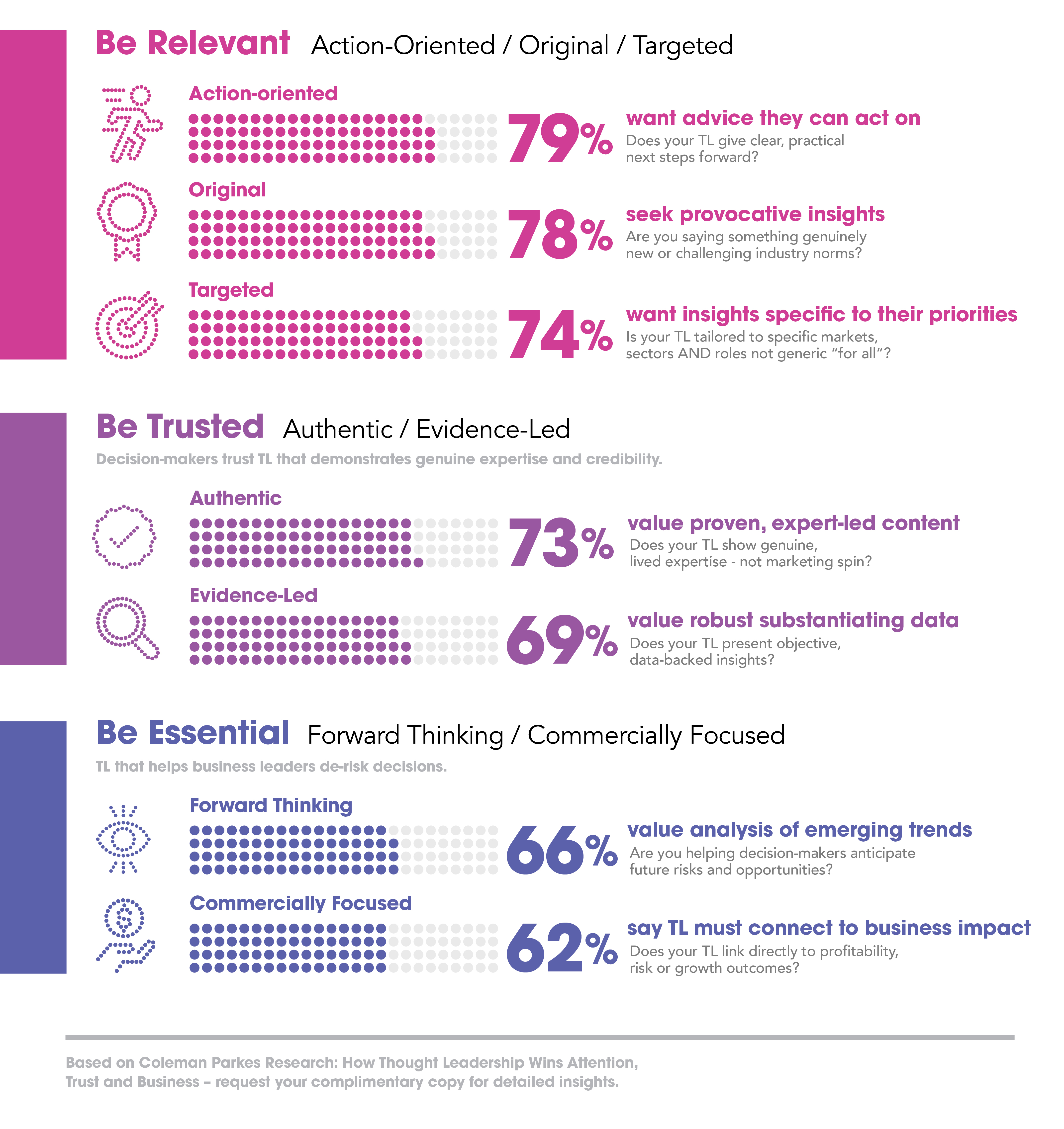
The seven pillars of high-performing thought leadership
Based on research with 600 senior decision-makers behind £500K + contracts
Key findings:
- 95% of organisations have a thought leadership strategy
- The majority allocate 18% of marketing budget to thought leadership content
- 45% of business leaders say thought leadership fails to meet their needs
PRmoment speaks with Lorraine Emmett to explore the findings further:
What does the Coleman Parkes research reveal about the state of thought leadership?
Lorraine Emmett: With six in ten business leaders reporting that they see virtually identical content from multiple providers, that sameness is a clear warning of over-reliance on AI without proper editorial oversight. Thought leadership cannot be leadership if it could come from any of your competitors. It needs originality. True thought leadership gets you on tenders list, AI slop does not.
Why does mediocre thought leadership matter so much?
LE: Decision-makers are making hard commercial judgments based on what they see. If your thought leadership disappoints, they won't recommend you. They won't engage with you as a new supplier. Seventy-one per cent said they actively seek out competitors when their current providers fail to address their priorities. Thought leadership has become a litmus test for organisational capability. If you cannot demonstrate fresh thinking and genuine expertise in your content, buyers question whether you can deliver it in practice.
What are decision-makers actually looking for?
LE: They are drowning in content that identifies trends and highlights challenges. What they desperately need is content that helps them act. They want clear, practical guidance they can implement immediately. They want provocative perspectives that challenge their assumptions, not recycled industry talking points. And critically, they want content that speaks directly to their specific role, sector and business context, not generic insights that could apply to anyone. They want content that helps them make better business decisions.
Where should organisations be distributing this content?
LE: Through the channels where decision-makers naturally spend time. That means industry events, LinkedIn, and trusted professional networks, not just corporate websites and email campaigns. In the Coleman Parkes research 59% said they relied on relationship managers to share thought leadership content with them, 46% relied on trusted colleagues and internal networks and 40% would access thought leadership through online searches. The key is meeting your audience where they already are rather than expecting them to come to you. This is where you can set meaningful KPIs – are we inhabiting the same channels as our audience? Are we engaging with them and enabling them to make better decisions.
What role is AI playing in this evolution?
LE: Forward-thinking organisations use AI to amplify strategic thinking, not replace it. They use it to personalise and extend high-quality, research-driven insights across multiple channels with consistency. But AI only works if the foundation is solid. It can scale mediocrity just as efficiently as it can scale excellence. The organisations winning are those investing in rigorous primary research, genuine stakeholder collaboration and audience-first relevance as the bedrock of their strategy before AI ever touches it. Remember that stat, six in 10 have seen the same “Thought Leadership” from multiple vendors – ergo it’s not actually Thought Leadership, its trust dissolving spam and probably AI generated... use AI by all means but don’t become its slave.
What's your advice for CMOs struggling with this challenge?
LE: Coleman Parke’s research identified 7 pillars that distinguish exceptional thought leadership from the mediocre content that decision-makers have to sift through every day. Exceptional thought-leadership is action-oriented, original, targeted, authentic, evidence-led, forward-thinking and commercially focused. Get these right, and your thought leadership content will put you on the tender lists your competitors wish they were on.
At a time when almost half of business leaders are saying thought leadership content is failing to meet their needs, our own research (as highlighted in my last column) in the Trust Advantage Report found that half of senior buyers (50%) say trust is the single most important factor in vendor selection ahead of cost, innovation and delivery.
When trust is the currency that wins deals, can you really afford to spend it on content that looks like everyone else's?

If you enjoyed this article, sign up for free to our twice weekly editorial alert.
We have six email alerts in total - covering ESG, internal comms, PR jobs and events. Enter your email address below to find out more: