





Communications leaders are under growing pressure to prove their worth, not just in terms of influence or engagement, but in the language the boardroom understands: value, risk, and growth.
The problem? Most communications KPIs still don’t connect to those fundamentals. Reach, sentiment, share of voice – useful, yes. But sufficient? No.
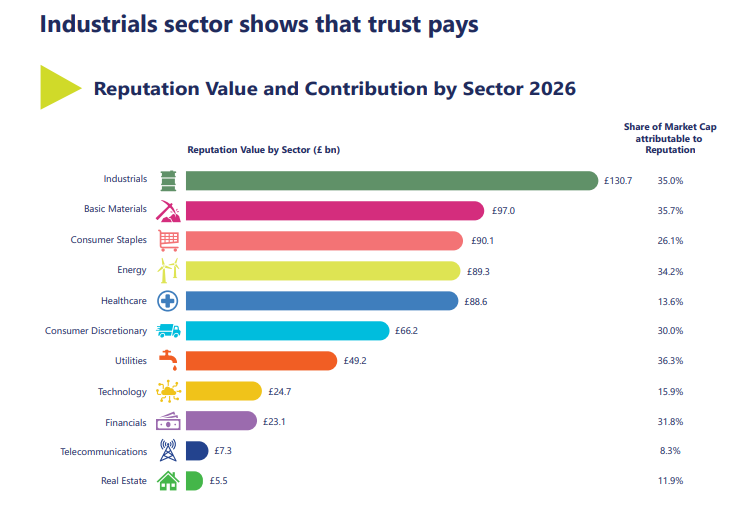
The reality is that the market has already moved on. Our latest UK Reputation Dividend analysis shows that £841 billion – more than a quarter of the FTSE 350’s market value – is now directly underpinned by corporate reputation.
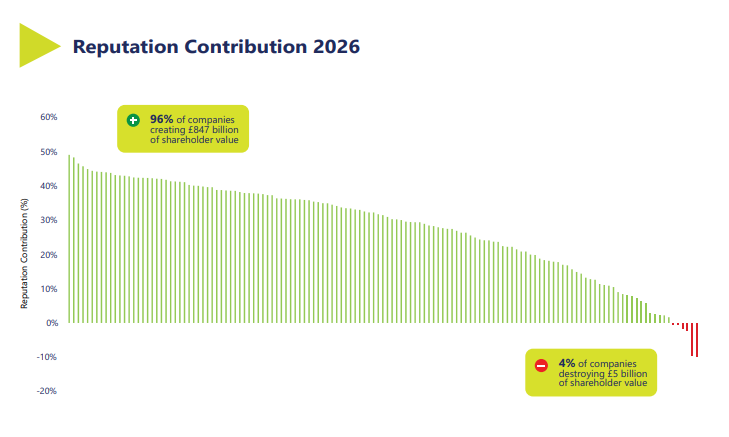
That’s not perception. That’s priced in. And it changes everything about how organisations should think about communications.
The measurement gap
Here’s the uncomfortable truth: while reputation is now a financial asset, it’s still being managed like a marketing campaign.
- Communications tracks sentiment
- Investor Relations tracks valuation
- Risk tracks exposure
- Finance tracks performance
Each function measures in silos, yet the market responds to all of it together. That’s where value is lost: in the disconnect. Reputation doesn’t sit within any single function, it lives across the enterprise. And increasingly, it determines how that enterprise is valued.
What the market is actually rewarding
The evidence is clear. Markets aren’t rewarding narrative; they’re rewarding delivery. The strongest drivers of reputation value today are:
- Quality of products and services
- Long-term value potential
- Financial soundness
- Management credibility
In other words, the fundamentals of business. Communications doesn’t create these in isolation, but it plays a defining role in how clearly, credibly and consistently they are understood.
That’s the new reality: reputation isn’t about what you say, but how effectively what you do is recognised, trusted, and ultimately valued.
The real problem: no shared KPIs
Ask a CFO what drives value, and they’ll cite earnings, cash flow, and predictability. Ask a CCO, and you’ll hear about narrative, engagement, and brand. Both perspectives are valid but they’re speaking different languages.
Until those languages align, communications will always struggle to be seen as a value driver rather than a cost centre.
This is the crossroads many communications leaders face today. The issue isn’t lack of impact – it’s lack of connection to the metrics that Finance and the Board trust.
What needs to change
The answer isn’t more data – it’s better alignment. The organisations leading the way are doing three things differently:
- Aligning around shared outcomes, not siloed metrics
The key question becomes: “What value did we create and what should we do next?” - Focusing on material drivers
Not everything matters equally. The priority is knowing which reputation drivers actually move valuation and focusing effort there. - Treating reputation as a portfolio
Reputation isn’t one score. It’s a portfolio of value drivers that should be managed with the same discipline as capital allocation.
Why this matters now
In a volatile environment of rising costs, geopolitical tension, and shifting investor expectations, trust matters more than ever.
It acts as:
- A buffer against downside risk
- A signal of leadership credibility
- A proxy for future performance
In short, trust is helping capital decide where to go. And that means communications has never had a bigger opportunity but only if it evolves.
From storytelling to value creation
The next stage for communications leadership is clear. Move from:
- Explaining performance → to shaping how it’s valued
- Managing perception → to driving measurable outcomes
- Reporting activity → to influencing capital allocation
Because when communications, investor relations, risk, and finance align around one shared question – what actually moves value, and how do we manage it better? – the impact is transformative.
In today’s market, reputation isn’t just something you build. It’s something you can measure, manage, and multiply. The organisations that master that will lead the next generation of growth.
Download the full report.
Written by
Sandra Macleod, Group CEO of Echo Research
If you enjoyed this article, sign up for free to our twice weekly editorial alert.
We have six email alerts in total - covering ESG, internal comms, PR jobs and events. Enter your email address below to find out more: