




Salary transparency remains the highest priority for PR talent for the second consecutive year.
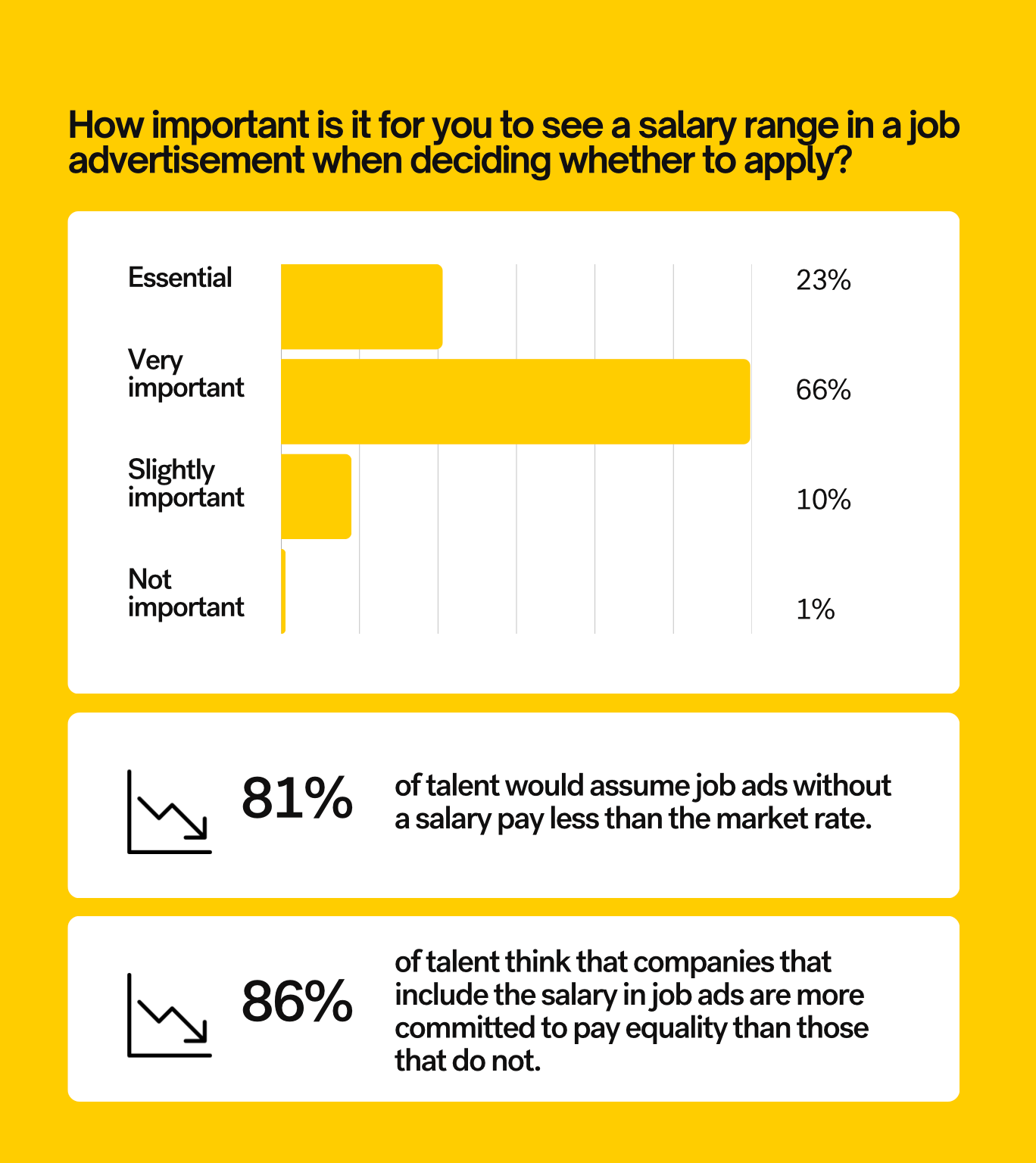
The findings in Latte’s 2026/27 PR Salary & Talent Guide, which surveyed and analysed data from 450 UK PR professionals, highlight the strong demand for increased pay transparency across the industry. 89% of respondents said seeing a salary range on a job ad is either essential or very important when deciding whether to apply. A further 81% also say they assume job ads without a clear salary pay less than the market rate.
It’s a clear indicator that including a salary range on your job adverts will increase engagement.
It's also an easy step towards reducing gender and ethnicity pay gaps. This also provides business leaders with a chance to show that they are taking action on pay inequality, as 86% of PR talent agree that companies that include the salary in job ads are more committed to pay equality than those that do not.
What else can PR leaders take action on to attract talent?
Parental leave
Findings from the survey show that 62% of all talent said that a company’s parental leave policy is important when applying for a job. Rather than list this benefit as "enhanced parental leave", be specific on where you go above statutory requirements.
Annual leave
Above statutory annual leave ranked in the top three for most valued benefits – a strong indicator that jobseekers continue to seek roles with good work life balance. If you offer above statutory annual leave, include this in your job ad, alongside associated benefits like Christmas shutdown, work from anywhere schemes, sabbaticals and birthdays off.
Career progression
Stunted career progression ranked as the third highest reason for PRs leaving their job. To counteract this, PR leaders should communicate career progression plans to team members and more importantly, what skills they need to develop to achieve that promotion. Anecdotally, talent rarely leaves a role because they didn’t get a promotion. They leave because they don’t understand why they didn’t get the promotion, and because they have a lack of clarity of what they need to do to get it.
Flexible working
The hybrid working debate continued over the past twelve months with rumblings of more brands and agencies moving towards four days per week in office. The data shows a different trend, with three days in office requirements up from 39% to 52%, and four days in office requirements down by 2%. The preference of talent mirrors this, with the vast majority of the industry (77%) preferring a hybrid schedule of two to three days a week in the office. Beyond hybrid working, flexible benefits are valued (ranking as the second most valued benefit). Flexible hours, work from anywhere schemes, and early finish Fridays remain a competitive edge, offered to less than 50% of all talent.
Download the full report. here.
If you enjoyed this article, sign up for free to our twice weekly editorial alert.
We have six email alerts in total - covering ESG, internal comms, PR jobs and events. Enter your email address below to find out more: