





Is it better to be remembered or recommended?
For decades, the B2B PR industry obsessed over building brand fame through media and analyst relations. We want buyers to remember us when they finally need a solution. Byron Sharp calls this building mental availability.
But generative AI has changed the rules of discovery. Data from SparkToro confirms that 68.01% of US Google searches ended without a click to the open web. Enterprise vendor evaluation is moving off your website and into closed algorithmic environments.Currently, Forrester reports 94% of business buyers rely on artificial intelligence tools during their purchasing process.
This raises an unavoidable question for our industry. Is it better to be humanly remembered or algorithmically recommended?
Human memory vs. Machine logic
The AI hype train has left the station. At Babel, we’re constantly asked about Reddit, Wikipedia or any of the multiple Generative Engine Optimisation strategies popularised by online gurus. So, we wanted to know if it was all hype or whether we needed to change gears and start serving the machines.
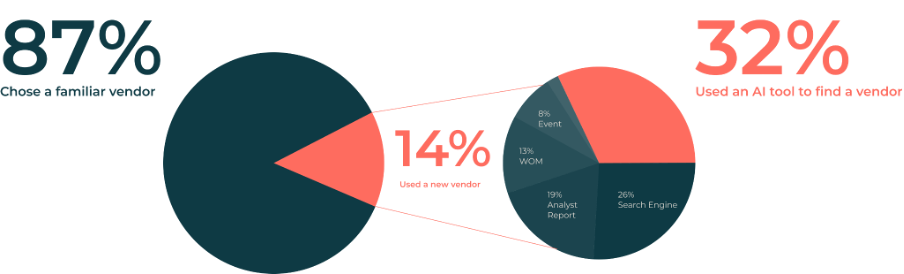
Working with Sapio Research, our research looked to uncover whether being remembered or recommended mattered more. As a brand advocate, I was relieved by the baseline. B2B buyers still purchase based on familiarity, with 87% of large scale technology decisions going to familiar brands.
But there is a catch.
When buyers look beyond their known networks, 32% use AI to find a new vendor. This machine driven discovery beats legacy PR pillars. It outperforms analyst reports by 13 percentage points, and word of mouth by 19 percentage points. In just a few years, AI is now recommending 5% of all purchases. This growth is insane and there is no doubt this will continue to increase
AI is introducing the challengers. Humans love a shortcut. We want to avoid making a terrible decision. The fear of getting fired is real, and AI acts as a rapid validation mechanism.
Does brand fame translate to AI discoverability?
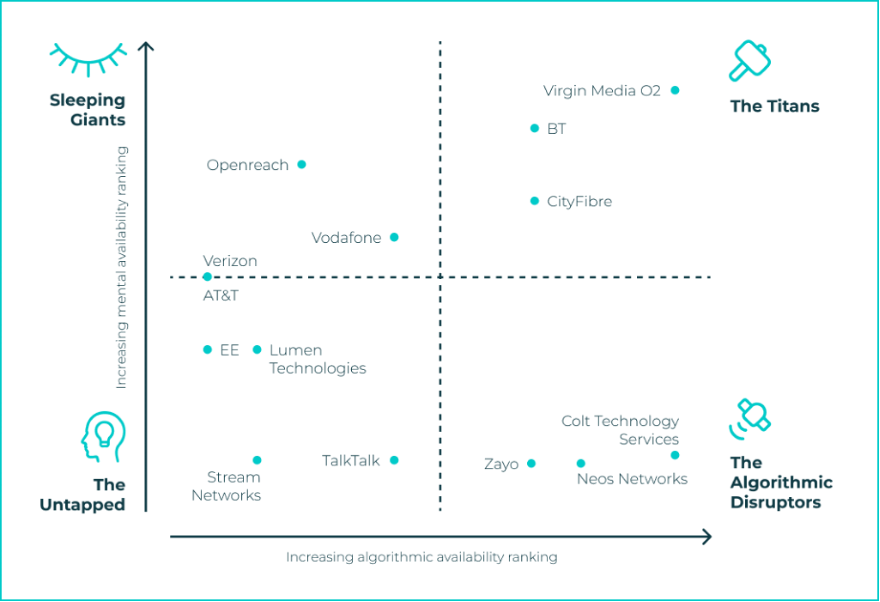
The next question we had to answer (and not by asking AI), was whether there was a correlation between brand fame and AI discoverability So, we put it to the test. We had humans recall their top brands across 18 categories, and asked the LLMs the same question. Would the same brands take the top spot in both?
The short answer is no.
Massive market presence fails to trigger machine recommendations if web crawlers cannot verify your expertise. We found generative models punished brands with broad portfolios that lack specific technical depth, fell foul of topic drift or were too generic.
Conversely, agile specialists regularly outsmart massive conglomerates. They speak directly to their niche and provide easily accessible technical data.
How does AI change our approach to PR
OK, I hear you – what did we learn?
The honest truth is: make sure you have a solid strategy. That means segmenting your audience, picking a target and creating the positioning to engage them. Easy, no?
Well, it doesn’t seem to be in B2B. Too often, we see vanilla, generic copy. We see brands chasing any and all media attention to bump up coverage numbers. And, we see a lot of brands saying the same thing.
If you do your strategy correctly, your messaging will target the exact buyer you want. You will say no to media opportunities outside the topics you want to own. You will uncover unique perspectives that provide real information gain for both humans and machines.
Then, it’s all about feeding the machine what it wants – expertise and authority. That means ensuring that all that good content you produce is freely available, and not hidden behind a gate. All your research, case studies, guides, playbooks and the likes (not calculators or interactives), should be accessible, crawlable and in HTML to support discovery.
Beyond open content, you must also structure it for machine reading. AI acts like a researcher conducting query fan outs to find highly specific answers. Your PR coverage acts as a flare pointing AI systems back to a cluster of technical content on your site. If you secure the PR hit, but lack the supporting technical content, the AI simply goes to your competitor.
Targeting also requires a shift in mindset. A traditional "Tier 2" niche publication might actually be a “Tier 1” title for the machines looking for the specifics and authoritative sources.
Finally, activate your spokesperson bench. Update their profiles and publish technical thought leadership. A post about a corporate away day does nothing for AI discoverability. Make sure your spokespeople posts clear, assertive opinions about the industry to build entity authority.
The future of B2B public relations belongs to those who accept that media visibility (and the surrounding tactics) must serve both human memory and machine logic. While buyers still buy from familiar brands, the rise of AI as a discovery and validation tool means we have to prepare for a different future.
Those brands that act now will get a head start. And a head start in this arena will only ever be compounding.
If you enjoyed this article, sign up for free to our twice weekly editorial alert.
We have six email alerts in total - covering ESG, internal comms, PR jobs and events. Enter your email address below to find out more: